UnlockingADHD

Empowering ADHDers and their Families to Live Life to the Fullest

UnlockingADHD

Empowering ADHDers and their Families to Live Life to the Fullest

  • English

  • About Us
    • Publications
    • About Us
    • Our Mission/Logo
    • Our Board of Directors
    • Scientific and Medical Advisory Committee (SMAC)
    • Our Team
    • Media coverage
  • Understanding ADHD
    • What is ADHD?
    • Who should I see?
    • Should I get assessed?
    • Diagnosis / Assessments
    • Medication
    • Natural ADHD Remedies
    • Other Treatment Options
    • ADHD Comorbidities
    • Health & Nutrition
    • Personal stories
  • Living with ADHD
    • Youth
      • ADHD in Teens
      • Careers
      • Executive Function
      • Personal Stories
      • School
    • Families
      • ADHD in Children
      • School
      • Parenting Approaches
      • Personal Stories
      • Self care
    • Adults
      • ADHD in Adults
      • ADHD in women
      • Executive Function
      • Personal Stories
      • Workplace Issues
    • Differently Wired Minds
      • The UnlockingADHD Team
      • The Creatives
      • The Entrepreneurs
      • The Social Warriors
      • The Guides
      • The Catalysts
  • ADHD Resources
    • Adult ADHD Self-Assessment Tool
    • Healthcare and Community Services
    • Seminar/Conference
    • Book Reviews
    • Other Resources
  • Get Involved
    • Volunteering
    • Events
    • Donations
    • Careers
  • Contact Us
    • Contact Us (Counselling Services)
    • Contact Us (General Enquiries)
  • Donate
ADHD in Adults, ADHD in Teens

Living with ADHD: Are we “Special Snowflakes”?

ADHD in Adults, ADHD in Teens
July 11, 2021


Unlocking ADHD writer Jnanee Krishnasamy examines the issue of shame and rejection and the role it plays in some of the dilemmas that adult ADHDers face in daily life. She shares insights on how we can provide support to help those with ADHD unlock their potential.
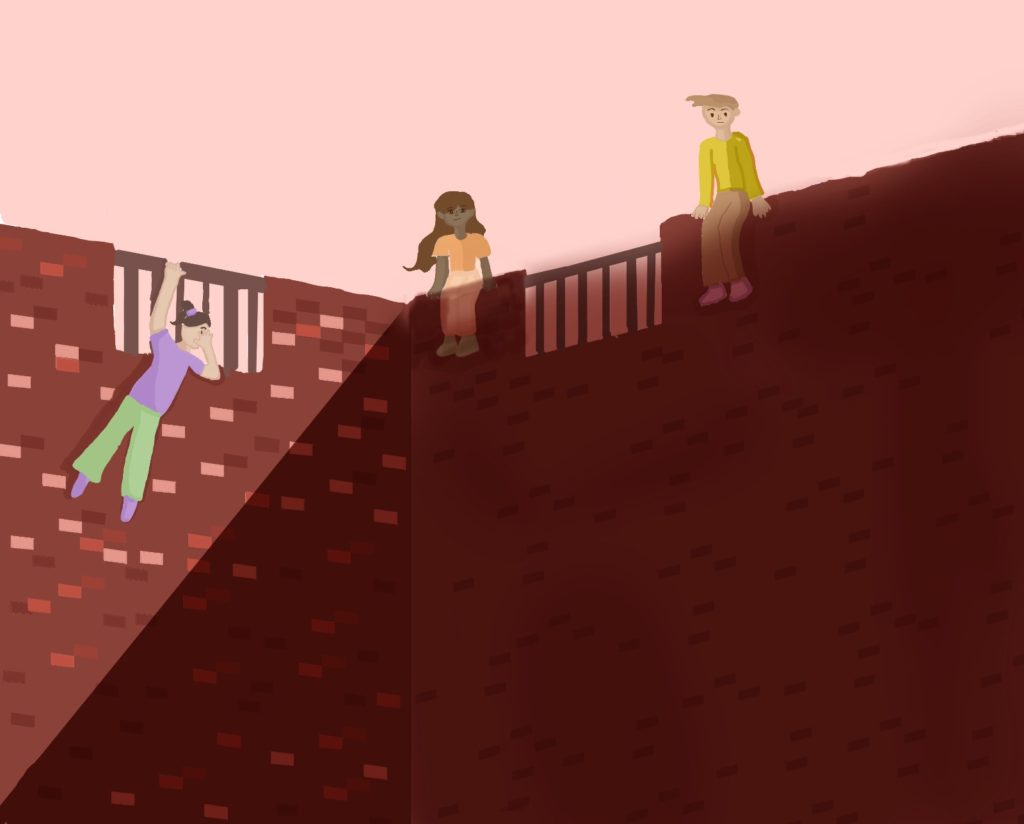
Graphics: Tan Li Yan

Shame is a perfectly normal human emotion. All humans feel it (except maybe sociopaths, but that is another story).

ADHD folks are all-too-familiar with shame. We tend to ruminate over our past and present in vivid detail. We feel inadequate when we remember our past failures. In addition, we would have angered and disappointed people with our failures.

When people get angry with us, it is a form of rejection.

Rejection is a deeply painful sensation to begin with. Some say that rejection is worse than death. Rejection brings about shame. ADHD folks commonly have Rejection Sensitive Dysphoria (RSD), which intensifies the feeling of rejection and shame.

Our past failures may have contributed to our present state (to varying extents), and some of us may feel shameful about our current difficulties (e.g. unemployment, financial issues).

Naturally, we fret over the future. We think about all sorts of disastrous scenarios and the shame that they might bring. We think about ways to avoid failure. We think about asking others for help and support…but we hesitate. Our formal diagnosis was meant to be a tool in our arsenal to plan our future. Instead, it has become a black mark.

Why are we afraid to ask for help?

The Fear Of Appearing ‘Entitled’

Source: Free-Photos from Pixabay

Millennials are frequently accused of being ‘snowflakes’. The label refers to oversensitive, attention-seeking young people who are unable to navigate life’s problems, and feel that life owes them benefits.

The accusations are not entirely unfounded. Just as it is human nature to feel shame, it is human nature to take advantage. There are people who capitalise on social media campaigns for name, fame and money. Even in our everyday lives, we encounter colleagues who routinely go on medical leave even if they’re well.

We also encounter people who use their hardships as an excuse to be nasty to others. Whenever they make mistakes, their hardships are their go-to excuse.

A person with ADHD will need a supportive environment. This involves accommodations by their family, friends and workmates. Unfortunately, ADHD is an invisible condition and appears easy to fake. Thus, people may think that our ADHD is an excuse for entitlement. It is easy to forget that we cannot consciously control our neurotransmitter system – just like how diabetics cannot consciously control their sugar regulation systems.

It can also be embarrassing to ask others to make adjustments or put in extra effort, when they have their own workload to deal with.

Every individual and workplace has their own ‘capacity for care’. When someone’s ‘capacity for care’ is exceeded and we seek their help, it is reasonable to be referred elsewhere.  Some are really unable to accommodate neurodiverse folks. Some people and places can accommodate, but do not wish to. Some people can be really unkind.

We’re hesitant to ask for help as we fear rejection. Even if our requests are met, we’re worried about simmering resentment underneath. These feelings bring us shame. If we don’t ask, we struggle anyway. People wonder why we’re struggling, express their disappointment (sometimes brutally) and then we feel ashamed.

There are also people who believe that ADHD is over-diagnosed (or even nonexistent). We know they are out there, and fear that these people will accuse us of creating a “label” to excuse our inadequacies.

We’re damned if we do, and damned if we don’t.

The Sweetness Of Independence

It is crucial to remember why we ask for help. We want nothing more than to be productive members of society.  We work far harder than neurotypicals to achieve the same level of success as them. As ADHD folks, we are frustrated at the idea of depending on others. We crave independence and the self-fulfilment that comes with it.

It is important to realise that everyone makes mistakes, and everyone should learn from them (brain chemistry aside).

Source: Sasint on Pixabay

At the end of the day, no man is an island. Mutually beneficial partnerships are crucial to success. It is entirely possible to have a mutually beneficial partnership with a neurodiverse person.

An ADHD person can still have an excellent attitude and work ethic. If that person is given the right tools and the environment, they can contribute immensely to society.

One need not look further than Richard Branson (the billionaire entrepreneur) and Michael Phelps (the Olympic swimmer) – two wildly successful folks with ADHD and the tools to succeed.

If you like this article and find it helpful, please share this with your networks. Do consider donating to support us in our mission to empower ADHDers and their families to live life to the fullest so that we can continue to create more content that informs and equips the ADHD community – Please Donate To Support UA.

*DISCLAIMER: This information is provided for educational purposes only and does not constitute medical advice. Should you suspect that you have ADHD, consider seeking the advice of a trained mental health professional with any questions you may have about your condition.

Subscribe to our newsletter

  1. ADHD and Counselling: Journeying in the Woods
  2. MYTH OR FACT?
  3. My ADHD Journey

Resources on ADHD

  • Adult ADHD Self-Assessment Tool
  • Understanding ADHD
  • Healthcare and Community Services
  • Support Groups
  • Online Resources
  • Contact Us (General Enquiries)
  • Contact Us (Counselling Services)

Follow us

Copyright © 2026 · Unlocking ADHD Ltd. All rights reserved. Terms | Privacy policy
Unlocking ADHD Ltd does not provide medical advice, diagnosis, or treatment. The material on this web site is provided for educational purposes only.

We use cookies on our website to give you the most relevant experience by remembering your preferences and repeat visits. By clicking “Accept All”, you consent to the use of ALL the cookies. However, you may visit "Cookie Settings" to provide a controlled consent.
Cookie SettingsAccept All
Manage consent

Privacy Overview

This website uses cookies to improve your experience while you navigate through the website. Out of these, the cookies that are categorized as necessary are stored on your browser as they are essential for the working of basic functionalities of the website. We also use third-party cookies that help us analyze and understand how you use this website. These cookies will be stored in your browser only with your consent. You also have the option to opt-out of these cookies. But opting out of some of these cookies may affect your browsing experience.
Necessary
Always Enabled
Necessary cookies are absolutely essential for the website to function properly. These cookies ensure basic functionalities and security features of the website, anonymously.
CookieDurationDescription
cookielawinfo-checkbox-analytics11 monthsThis cookie is set by GDPR Cookie Consent plugin. The cookie is used to store the user consent for the cookies in the category "Analytics".
cookielawinfo-checkbox-functional11 monthsThe cookie is set by GDPR cookie consent to record the user consent for the cookies in the category "Functional".
cookielawinfo-checkbox-necessary11 monthsThis cookie is set by GDPR Cookie Consent plugin. The cookies is used to store the user consent for the cookies in the category "Necessary".
cookielawinfo-checkbox-others11 monthsThis cookie is set by GDPR Cookie Consent plugin. The cookie is used to store the user consent for the cookies in the category "Other.
cookielawinfo-checkbox-performance11 monthsThis cookie is set by GDPR Cookie Consent plugin. The cookie is used to store the user consent for the cookies in the category "Performance".
viewed_cookie_policy11 monthsThe cookie is set by the GDPR Cookie Consent plugin and is used to store whether or not user has consented to the use of cookies. It does not store any personal data.
Functional
Functional cookies help to perform certain functionalities like sharing the content of the website on social media platforms, collect feedbacks, and other third-party features.
Performance
Performance cookies are used to understand and analyze the key performance indexes of the website which helps in delivering a better user experience for the visitors.
Analytics
Analytical cookies are used to understand how visitors interact with the website. These cookies help provide information on metrics the number of visitors, bounce rate, traffic source, etc.
Advertisement
Advertisement cookies are used to provide visitors with relevant ads and marketing campaigns. These cookies track visitors across websites and collect information to provide customized ads.
Others
Other uncategorized cookies are those that are being analyzed and have not been classified into a category as yet.
SAVE & ACCEPT

Daniel

This image has an empty alt attribute; its file name is logo-2-1.png
AMKFSC Community Services has a Psychological Services Unit (PSU) which has a team of clinical and counselling psychologists for children/youth and their parents. Core services include psychoeducational assessments (5 to 16 years old) for ADHD and other learning disabilities. They also offer group and individual psychotherapy. They only provide services to residents in their constituency.

Fees are $70 per one hour session. Psychoeducational testing ranges between $750 to $1,120 depending on the tests required.

Email: psureferral@amkfsc.org.sg.

Moonlake is the Founder of Unlocking ADHD. A community builder and multi-hyphenate, she runs to fat burn so that she can enjoy food with family and friends. She is still working on strengthening the brakes for her ADHD wiring…