


Law, Life, and Lessons with ADHD

Ahmad Nizam Abbas is a lawyer, educator, and community leader whose late ADHD diagnosis helped him reframe how he works and lives. As Head of Crescent Law Chambers and co-author of Singapore’s first Syariah law textbook, he has contributed to Singapore’s legal practice while championing mediation and family law. Today, he embraces the curiosity, drive, and energy that ADHD brings, seeing them as strengths that continue to guide his journey.
Quotes
“ADHD is not a deficit. It is a different way of thinking that, with the right strategies, becomes a strength.”
“When something catches my curiosity, I tend to go into hyperfocus mode and become a mini specialist overnight. That intensity has been invaluable in law, where anticipating arguments and preparing counterpoints requires depth and breadth of knowledge.”
A Diagnosis That Made Sense
I was only diagnosed with ADHD around 2021 or 2022. By then, I was already in my fifties, so you could say it was a late discovery. It happened by accident, during something as ordinary as a car ride. I was driving a psychotherapist to a meeting. Throughout the journey, I kept overriding the GPS instructions, insisting I knew better routes. At the end of the trip, she turned to me and said, “Ahmad, do you know that you have ADHD?”
At first, I was puzzled. How could arguing with a GPS point to ADHD? But she explained that a “normal” person might just follow instructions, while I instinctively resisted them, juggling a conversation, navigating, and insisting on my own way. She later referred me to a psychiatrist, and that led to my diagnosis.
It was a light bulb moment. Suddenly so many things made sense – why I was always juggling a million things, why I rarely slept, why some teachers adored me and others couldn’t stand me.
A Spiky Profile
I’ve always had what is now called a “spiky profile.” In school, I excelled at English, literature, history and geography; subjects I loved. I topped my class in exams for three years straight in those areas, engaging teachers well beyond the curriculum. But in subjects like math, science, or economics, I barely scraped through. My report cards were a strange mix of top grades and red marks.
As a boy, I devoured encyclopaedias. My parents bought full sets, and I would devour the topics I was interested in. Then I would rewrite the information into tables and charts. At eleven or twelve, I could list every US president from George Washington to then President Jimmy Carter simply because I had written it in a table. I memorised world capitals and the names of prime ministers and Presidents long before the internet made such information accessible.
In fact, I was ‘disqualified’ from a general knowledge quiz because I answered too many questions. Teachers found it hard to believe someone could know so much. But I simply loved reading, absorbing facts, and organising them into visuals. So instead of being a contestant, they made me draft questions for the quizzes instead.
That same love for knowledge won me first prize in General Paper in junior college. I can still recall my essay on the role of women, written in 1984. I opened with the names of Sirimavo Bandaranaike of Sri Lanka and Golda Meir of Israel; details I had picked up outside the syllabus. It impressed the markers, but more importantly, it showed how my ADHD wiring allowed me to connect the dots between what I read and what I wrote.
From Encyclopaedias to the Courtroom
Those habits never left me. Today in my legal practice, I rely heavily on tables and visuals. My colleagues know I am obsessed with them. To handle complex cases, I create tables for chronology of events, issues in dispute, and positions of each party. Seeing information side by side helps me absorb and recall it quickly.
In court, I cannot rely on neat, polished submissions. What anchors me are my scribbles, my annotations, the little arrows and notes I draw. They trigger my ‘photographic’ memory. I can look at a messy draft and recall entire arguments. Give me a clean copy and I am lost.
I also have what I call a “crazy superpower”: I can remember WhatsApp conversations without scrolling back. In groups where hundreds of messages fly daily, people often forget what was said. I can summarise them like minutes of a meeting, listing who said what. It surprises others, but for me it feels natural.
Professional Firsts
One of my proudest professional achievements is writing Muslim Family Law in Singapore. For decades, I built a personal library and prepared notes for talks and lectures. When I started teaching at the university, I realised students had no local textbook, only foreign ones that didn’t reflect our context.
I decided that had to change. So, I compiled my materials into Singapore’s first Syariah law textbook. It has since become a compulsory subject for all lawyers-to-be at the Part B (colloquially known as the Singapore Bar exams) . That contribution still feels significant, because it filled a real gap in legal education.
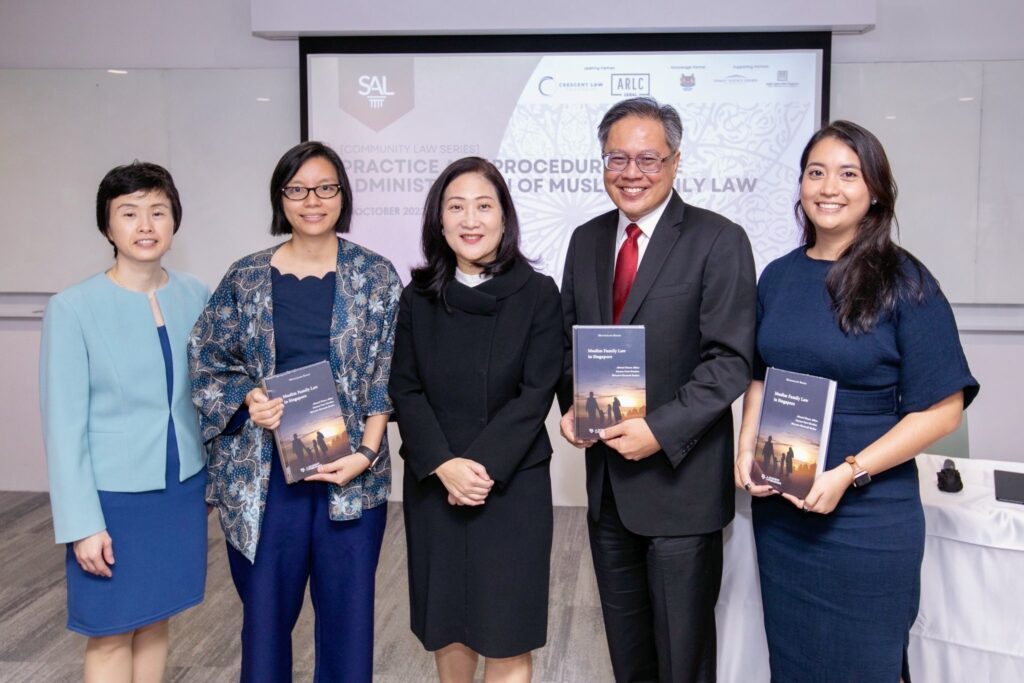
As Head of Crescent Law Chambers, I specialise in family and Syariah law, divorce, custody, maintenance, asset division, with a strong focus on mediation and collaborative practice. I was Chairman of the Muslim Law Practice Committee for more than a decade and till today, frequently speak at seminars and webinars. Even though I joke that I’ve slowed down now that I’m nearing 60, my calendar remains packed.
Lessons from ADHD
My ADHD has been both a challenge and a gift. In school, my energy and restlessness were often misunderstood. Some teachers thought I was disruptive, even “the biggest idiot in the class.” I used to sleep in economics class. But in subjects I loved, I soared and couldn’t stop talking.
If I could advise my younger self, I would say: don’t neglect the subjects that don’t interest you. Passion drives excellence, but discipline ensures balance. Life requires both.
I would also urge teachers to be more empathetic. Sometimes, boredom looks like inability, but it isn’t. When I watched Oppenheimer, I thought: why didn’t I have a science teacher like that? Someone who could bring the subject alive. With the right style, even “boring” subjects could have sparked my interest.
My wiring is interest- and novelty-driven. When something catches my curiosity, I glide into hyperfocus mode and search for practically everything related to the subject. That intensity has been invaluable in law, especially when confronted with complexed arguments and counter arguments which can be novel and without precedents. Some of my cases at the Syariah Court and Appeal Board have become landmark judgments.
Energy as a Signature
People often describe me with one word: Energy. During my mediation practical exam in 2008, the assessor concluded with, “I love your energy.” At first, I didn’t understand. To me, it was just normal. But to others, it stood out.
That energy has fuelled my career and community work. In my twenties and thirties, I served in more than 20 organisations at once. Today, I may have slowed, but that is a relative term as I am kept busy in more than 10 organisations.
Looking Ahead
I share my story because I hope it inspires others with ADHD, especially in demanding fields like law. For me, ADHD is not a deficit. It is a different way of thinking that, with the right strategies, becomes a strength.
I want people to understand that difference is not deficiency. With empathy, flexibility, and support, individuals with ADHD can thrive. My own journey, from encyclopaedias and tables to textbooks and courtrooms, is proof of that.
Support the ADHD Community
If you’d like to read more stories like these, consider donating $150 or more to receive a copy of our book, Differently Wired Minds as a thank-you. Limited quantities available.
Your donation helps Unlocking ADHD provide counselling, psychoeducation, and other vital support services to those affected by ADHD.
Special thanks to our sponsors whose generous support made this book possible:
MINDSET, Singapore Pools, Chua Foundation, Hyphens Pharma




Leave a Reply