


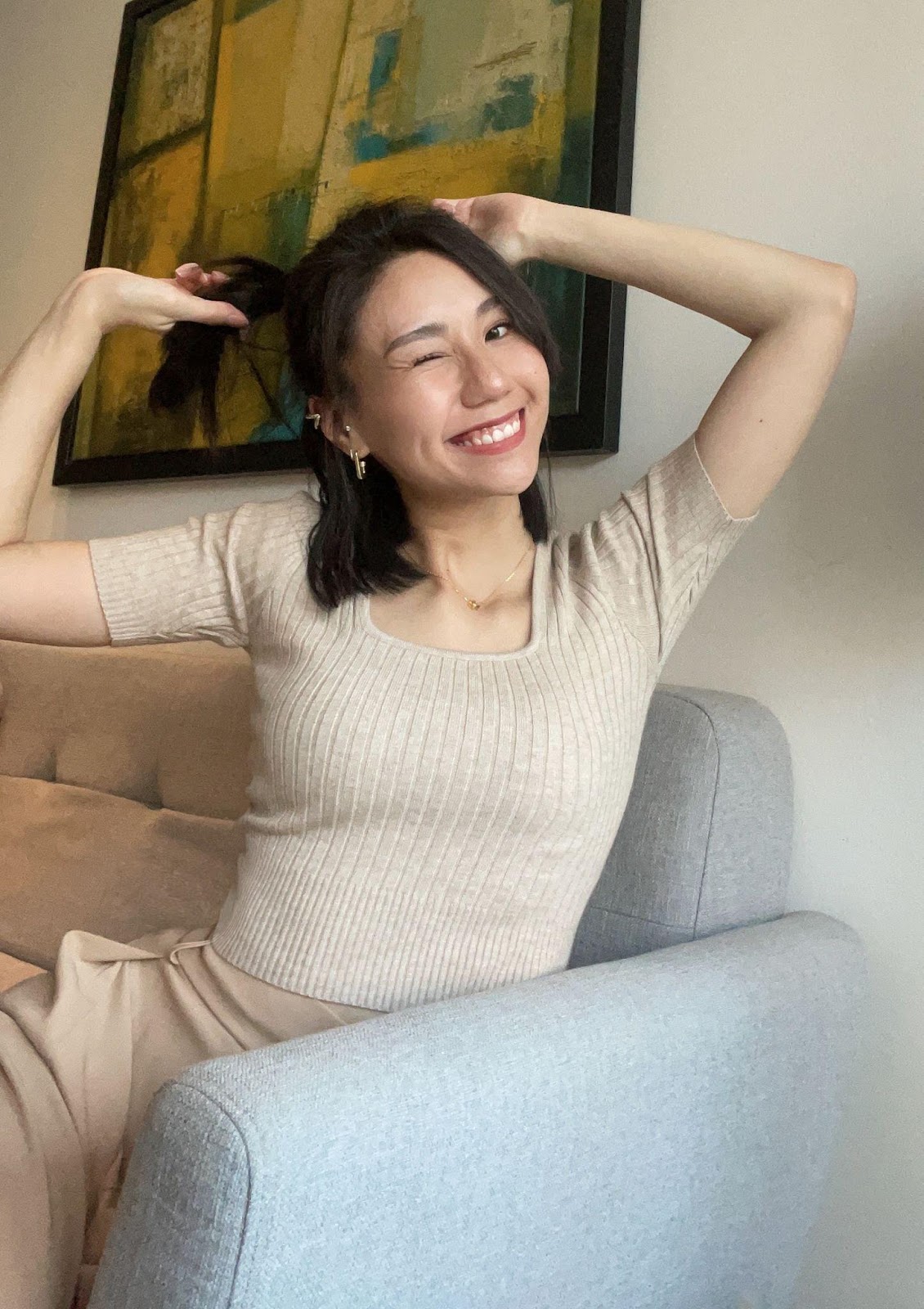
Unlocking ADHD contributor Mag Chan is the 29-year-old art director and co-founder of HVV, an e-commerce fashion label she co-founded with her sister in 2007 – the same year she was diagnosed with moderate-severe combination-type ADHD.
Why I got diagnosed
Nobody would guess it now, but I was a bit of a wild one! By age 15, I had already amassed a whole history of bad behaviours under my belt. It ranged from fairly harmless things like constantly breaking school uniform code, to flooding my bathroom in an earnest attempt to simulate a diving excursion as a toddler, to shattering my ankle during a fight.
So when my mother caught wind of my friend’s ADHD diagnosis in 2007, it was almost as though things clicked in place and she could finally make sense of my experience.
I was diagnosed with moderate-severe combination-type ADHD that year.
Reactions to my diagnosis

Putting a name to my personality was joyful, overwhelming and validating all at once. My head was suddenly rife with questions. Would I finally find out why I had always felt ‘different’? Were approaches to life other than the elusive need to ‘try harder’ actually within reach?
However, before I could begin to fully connect with what having ADHD meant, my hopes were quickly stamped out.
Sharing my diagnosis with my teachers back then always led to one of three reactions: Confusion, disbelief or flat-out rejection. I was attending an elite school. I remember how my heart stopped when my vice-principal hissed, “It’s not ADHD. You’re just disturbed”, or how small I felt when my teacher told me pointedly that it was something my psychiatrist had cooked up to take my money.
Impressionable 15-year-old me ate that all up. There was a deep shame I never quite shook. I halted my medical treatment as quickly as I’d started.
But one day after I’d gotten into an especially bad spot of trouble, my dad sat me down and told me, “If you’re going to break rules, do it better.”
My parents’ relentless support changed my relationship with them. I found purpose in wanting to succeed. More than anything, I wanted them to know their hopes in me weren’t misplaced.
Life continued in relative peace. I plodded hard enough through the rest of school to score A’s and B’s. I entered a (shaky) truce with my teachers. I co-founded our fashion e-commerce company, Her Velvet Vase, with my sister in between – to great success!
But my impulses and mood swings continued to blaze on like firestorms. When I was happy, I was euphoric, on top of the world. When I was sad, I lapsed into deep, hellish misery. And I continued to mask all of it, clumsily trying to blend in with every fiber of my being.
The turning point

I finally found my personal breakthrough when I moved to New York City for college.
Even though I’d gotten into one of the best fashion design programmes in the world at Parsons, I felt resistance returning to school after taking two years off to grow our business – something that had become my greatest pride. The idea of returning to an environment I had floundered in before was terrifying.
I remember coming home from an awful day shrouded by intense feelings of defeat. “I feel like I’m regressing,” I said while crying to my boyfriend, Marco, over FaceTime. “I’m missing out on being able to build something I really care about!”
“Well, there must be something you really care about here too. You just have to remember what that is. Use that to keep going,” he replied tenderly.
Though I hadn’t seen it through an ADHD lens then, that moment shaped the way I looked at purpose, motivation and rewards. It wasn’t just about doing the “right” thing or staying on the path I thought was expected of me and burying my symptoms accordingly.
Rather, I started to recognise my own pattern of defaulting to self-defeat and gradually moved towards curiosity about myself, my environment and the people around me. I leaned into the strengths that others had called ‘crazy’ (my hyperfocus and talent at churning out some of my historically best work under pressure), and why I could think creatively on the fly and make radical connections that neurotypical people were unable to.
I ended up loving my NYC experience, as gritty and challenging as it was, both culturally and academically. Especially because I had chosen to do so – for myself and my family.
Harnessing my ADHD

Prior to moving to NYC, I had only met 1-2 people who had been diagnosed.
In New York, I happened upon friends who spoke so poetically of their own ADHD and experiences in colours I didn’t know existed. Listening to them speak about their mental health journeys so openly and freely was jarring to me. But it left me with an indelible message – that ADHD isn’t a fundamental flaw. It’s something to be harnessed.
I started treatment again, this time pairing stimulant medication with cognitive behavioural therapy (CBT).
I also pored over various resources to learn everything I could about the ADHD experience, even moderating Clubhouse rooms to connect with other ADHD brains globally.
While the stimulant medication regulates my attention and productivity, it is therapy and community that have been transformative to my peace of mind and overall mental well-being.
With the guiding hand of my psychologist, I have been able to widen my window of tolerance for distress. I also understand that emotions are fleeting states, that uncomfortable emotions do not always signal grave emergencies, and that emotions can be tolerated, managed and even utilised.
The day I logged onto Clubhouse and typed “ADHD” into the search bar, I was unprepared to suddenly be met with the largest international congregation of ADHD brains in a single setting. Strong, loud personalities bounced off the walls of conversations in forthright and humorously candid ways, only to be gently herded back into order by the moderators, ADHD coaches and clinical specialists who were hosting the rooms. There were rules set in place that not only fostered structure but psychological safety for expression without judgment.
It was exhilarating to see how other adult ADHD brains further along in their journey had learned to live and thrive with their neurodivergence. I heard myself in every story and encounter that was shared. I even uncovered new things about myself that I hadn’t realised were ADHD-related, such as the compulsion to seek out new, innovative ways to do things or complete tasks because we actively resist following the status quo.
It is in this steady exploration that I have learned to give myself grace and to precisely label my emotions and internal triggers as they come – the first step in helping me accurately communicate my needs and advocate for myself while developing greater compassion for the needs of others.
Everyday ADHD
Day to day, the neurological differences have made me a rather feisty coworker. I’ve been told I’m hard to keep up with and that I can be brutishly impatient at times. I can also find it difficult to keep my passion and perfectionism under wraps. When I’m in high spirits, I’m engaging and motivating – but once we hit a bump, the same ferocity can be staggering.
While ADHD is not something one may ever get to conquer, managing it will be a lifetime’s personal development for me. And although I have made tremendous progress with CBT, medication and the sheer force of willpower that it takes to contain myself each day, I am still sometimes described as “erratic”.
Leadership with ADHD is like trying to find steady footing in a ball pit inside a bouncy castle – hilariously fun and chaotic, but inevitably some things escape.
Finally, I have learned how easy it is to fall into the trap of using large, vague concepts when it comes to goal setting. We inadvertently tie our self-worth to these broad, seemingly unattainable aspirations too. And what a slippery slope it is, because how we feel about ourselves affects the way we commit to things.
We can’t achieve things like “good and fair leadership”, “non-anxious” or “authentic” in a day. How are these words even measured? So I’ve learned to break it down into smaller pieces. Now, it’s easier to figure out a way to “listen”, “reframe” and “find common ground”, and those tiny ingredients put me on the way to establishing meaningful value.
Ultimately, I take pride in that lifelong commitment to progress.
Strong network, more awareness

Having spent most of my journey in gloomy solitude, I know firsthand the difference a strong community and empathetic support network makes for someone navigating their own neurodivergence. After all, we’re not just ADHD brains. We’re ADHD brains within families, schools, friendships, workplaces and communities.
Moreover, in a country where rocking the boat is nearly unheard of, the ADHD community here is one I’d really like to be part of and continue advocating for.
It’s a conversation that could always do with more voices, even if it’s a slightly over chatty and lippy one like mine.
[If you liked this story and found it helpful, please SHARE it. For more personal stories about ADHDers, please click here. You can view our past webinars on YouTube. ]




Leave a Reply