


Unlocking ADHD writer Chng Li Ming spoke with Cheyenne Seah on her ADHD from diagnosis to where she is today – helping businesses and ADHDers strategise and build on their strengths.
In this engaging interview, Cheyenne takes us through her diagnosis and treatment journey, while offering insights into ADHD and workplace discrimination, as well as strategies she has used to embrace her ADHD, find self-acceptance and live a more fulfilling life on her own terms.

What prompted you to get diagnosed for ADHD?
I was 30 years old, doing my PhD in Biology, and just looking for ways to not flunk out of my programme. I had developed coping mechanisms since a young age — while studying, I would often drink eight cups of coffee during the day and a bottle of wine at night. I would wake up feeling groggy and not well rested.
There was the constant battle between the inability to sleep and the inability to wake up, ever since primary school. I sought help, but even medical professionals were looking in the wrong places, attributing the issues to depression or anxiety.
It was only after a while that the ADHD conclusion was reached.

I found out it was genetic from my mother’s side, while my father’s side had high functioning autism. I come from a family which had high-flying careers in the corporate world, in law, and as business owners — which also brings me to the point that ADHDers often go under the radar when they are seen to be successful and accomplished in life.
What were your initial emotions and reactions to your ADHD diagnosis?
Initially after the diagnosis, I realised that I could not just ignore, suppress, and compartmentalise my emotions. I had always been disconnected mentally and emotionally; my head and heart did not feel connected 95% of the time.
I realised I could not be a workaholic to drown my emotions, and that the desire to get acknowledgement from work made me take a ‘full logic and no emotions’ route to try and over-perform. This became crippling in its own way as it is very tiring to keep up.
The diagnosis also made me realise that I had been suppressing many of my emotions. Many ADHDers have Rejection Sensitive Dysphoria, which makes the things that other people say or do, almost physically painful to us. Sometimes others may not mean harm, while some may mean it as a callous comment, but when we hear these things, we often feel as though the world has almost fallen through and our emotions are in the gutter for the day.
Once all these came to light after my diagnosis; it made me more aware of what was happening in my brain and with my emotions.
What did you do after you came to terms with your ADHD diagnosis?
I knew I needed to face up to my emotions. ADHDers can be quite emotionally charged and if tasks are not motivating, we avoid them like plague. The more we avoid these tasks, the more we develop a lot of negative coping mechanisms; whenever we see these tasks, we end up avoiding them in a vicious cycle.
As someone in a STEM field, I prided myself on my sense of logic. But I realised that sometimes my ADHD brain is not logical; it refuses to accept all my logical explanations about how I need to do something like paperwork, and just the sight of paperwork sends my emotions plunging and spiralling downwards.
After reading more about ADHD and understanding the function of the neurotransmitter dopamine in this emotional regulation process, I have since learnt how to better manage my emotions as this is an important part of functioning effectively.
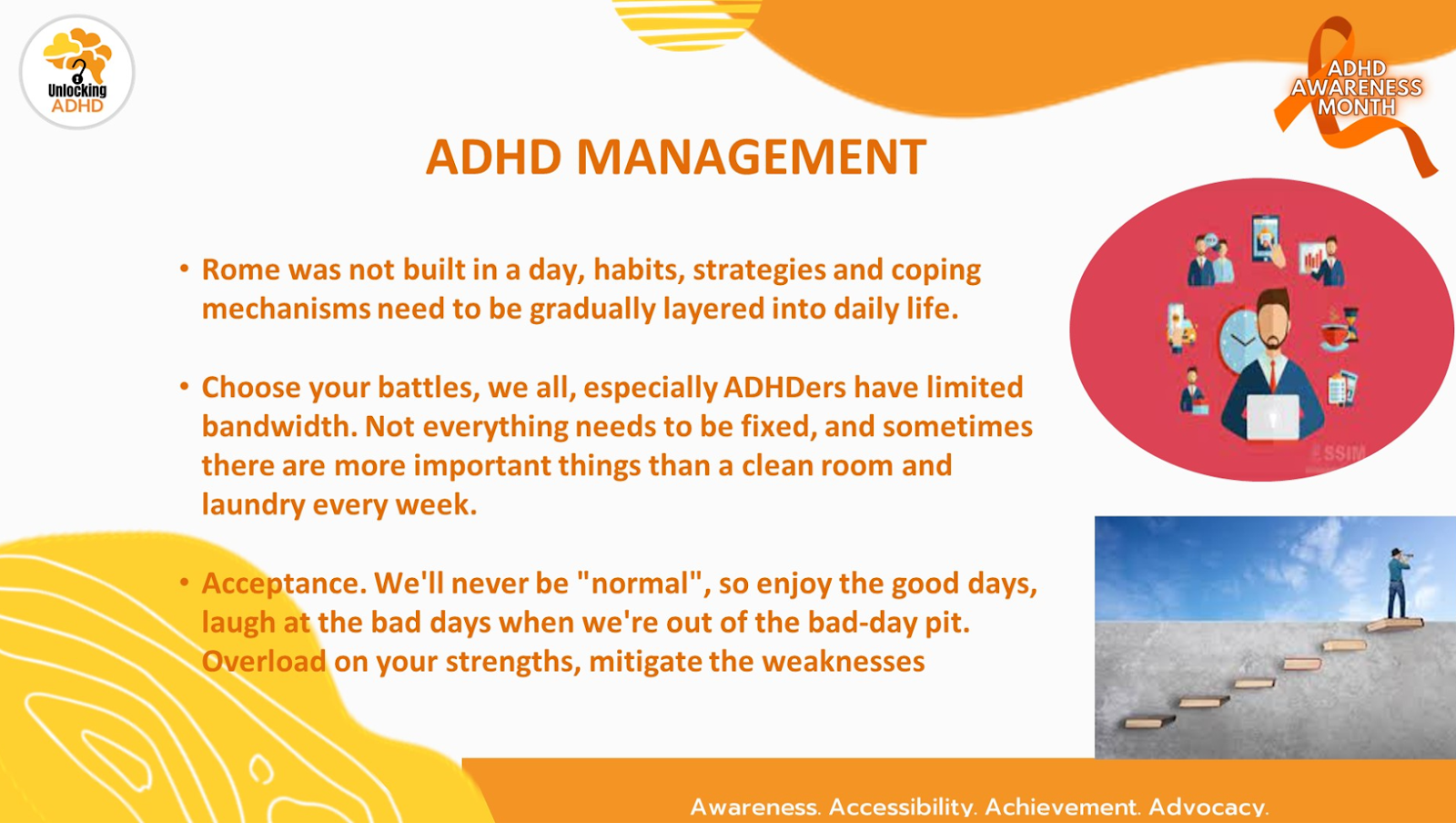
What has your journey with ADHD been like after your diagnosis?
I am now medicated with Ritalin for ADHD and Amitriptyline for sleep. Medication helps, but sleep hygiene is also very important for mental clarity. Previously, I was on Selective Serotonin Reuptake Inhibitors (SSRIs) which is commonly prescribed for psychological conditions, but each medication works differently for each individual, so I found my mood being affected negatively as I was easily triggered.
That said, female ADHDers who experience monthly hormonal cycles are also affected by hormonal changes and levels, so it is important to be mindful of how hormones interact with our medication. I am aware that some people think stimulant medication such as Ritalin has the potential to become addictive, but many ADHDers will say, “What addictive behaviour? I forgot to take my medication again.”
In addition to medication, I found out that nutrition and vitamins are very important. Right now, I am temporarily on a vegetarian diet, but the shortage of Vitamin B caused my brain fog to come back with a vengeance, so I am now on supplements for that. ADHDers can be sensitive to nutritional input, so it is important to find out what works for you. Cutting out white sugar and white bread helps for me because I find that I experience the sugar crash more than the average person.
Armed with medication, good nutrition, and knowledge about myself and my condition, I have been able to cope better since my diagnosis and find self-acceptance of who I am.
How do you think being diagnosed with ADHD did or did not help?
The diagnosis helped because I felt a lot of relief that I am not broken, and not being deliberately lazy. Now I know there are effective strategies that I can use to get ahead in life. It has made it much less painful to make things work and do paperwork, especially compared to doing paperwork unmedicated when I was serving my bond in public service.
People with ADHD often experience negative criticism in their lives, and I base quite a bit of my self-esteem on my performance at work. I wanted to do well and do something useful, which drove me to get my diagnosis.
Being diagnosed with ADHD also gave me shortcuts to hack my behaviour. I always wanted to do more in life but I felt myself impeded by brain fog and inability to rise up to the occasion to finish my work and meet deadlines (also, the older you get, the tougher it gets). I can now take better control of my behaviour, nutrition, and sleep, which contributes to my ability to perform.
That said, finding the right support is important. I had a negative experience where the psychologist I was seeing said that I was using ADHD as an excuse to get out of doing the difficult things in life — that I was imagining stuff and I should just pull up my socks and get on in life and stop being lazy. I have had to address these negative perceptions as well.
Most importantly, the ADHD diagnosis gave me a sense of peace and self-acceptance about myself. I know I will never be satisfied with only one career for the next 50 years. That’s okay with me because, due to my ADHD, I can pick up a lot of new interests and activities and can feel more comfortable letting go of activities that do not interest me.
What advice would you give your younger self?

I would advise my younger self to not beat myself up mentally so much. I would remind myself that I do have strengths and am not broken or worthless. I wish I had sought my path towards self-employment earlier. As someone who is a bit impulsive and who wants to see a positive impact on people, I cannot follow rules just because I am told to.
I would have told my younger self to embrace this trait and start the journey towards building myself and my financial independence. In doing this, I would also urge my younger self to pick up more skills along the way just so that I would not have to bend over backwards and hate everything that is ADHD within me, just to earn a salary and work 80 hours a week.
In the end, ADHD does not disappear miraculously at the age of 18; many adults with ADHD learn to cope, and some end up dealing with it negatively, such as I did with excess caffeine and alcohol. This is also why our prescribed medication can help us.
Ultimately, I have learnt to embrace my ADHD and have self-acceptance. I cannot change all things, but I have learnt to make it less painful. The ADHD treatment and medication journey is unique to each person, so while it may be a lifelong journey, it can and WILL get better as long as you work on it.
[If you liked this story and found it helpful, please SHARE it. For more personal stories about ADHDers, please click here. Unlocking ADHD has also organized a series of events this ADHD Awareness Month, and you can view our past webinars on YouTube.]


Is there a place where I can mingle with the community with ADHD friends.
Hi Samuel – thanks for asking – we have a monthly community hangout – usually the last wednesday of the month but for the month of September we will move it to early october to celebrate ADHD Awareness Month – please join our social media, e.g. facebook support community and the Discord server to get updates – you can also sign up for our updates at https://bit.ly/UAsubscribe