UnlockingADHD

Empowering ADHDers and their Families to Live Life to the Fullest

UnlockingADHD

Empowering ADHDers and their Families to Live Life to the Fullest

  • English

  • About Us
    • Publications
    • About Us
    • Our Mission/Logo
    • Our Board of Directors
    • Scientific and Medical Advisory Committee (SMAC)
    • Our Team
    • Media coverage
  • Understanding ADHD
    • What is ADHD?
    • Who should I see?
    • Should I get assessed?
    • Diagnosis / Assessments
    • Medication
    • Natural ADHD Remedies
    • Other Treatment Options
    • ADHD Comorbidities
    • Health & Nutrition
    • Personal stories
  • Living with ADHD
    • Youth
      • ADHD in Teens
      • Careers
      • Executive Function
      • Personal Stories
      • School
    • Families
      • ADHD in Children
      • School
      • Parenting Approaches
      • Personal Stories
      • Self care
    • Adults
      • ADHD in Adults
      • ADHD in women
      • Executive Function
      • Personal Stories
      • Workplace Issues
    • Differently Wired Minds
      • The UnlockingADHD Team
      • The Creatives
      • The Entrepreneurs
      • The Social Warriors
      • The Guides
      • The Catalysts
  • ADHD Resources
    • Adult ADHD Self-Assessment Tool
    • Healthcare and Community Services
    • Seminar/Conference
    • Book Reviews
    • Other Resources
  • Get Involved
    • Volunteering
    • Events
    • Donations
    • Careers
  • Contact Us
    • Contact Us (Counselling Services)
    • Contact Us (General Enquiries)
  • Donate
ADHD Guide, ADHD in Adults, ADHD in Teens, ADHD Treatment, Personal Stories, Seminar/Conference Notes

Key Steps to Thriving with ADHD

ADHD Guide, ADHD in Adults, ADHD in Teens, ADHD Treatment, Personal Stories, Seminar/Conference Notes
November 1, 2022

Unlocking ADHD writer Naline Virabhak shares key takeaways from the “Thriving with ADHD: Unlocking Ferrari brains, strengthening bicycle brakes” webinar held in conjunction with ADHD Awareness Month.

October is ADHD Awareness Month, and what better way to have kickstarted it than a conversation with renowned American psychiatrist, best-selling author and leading authority on ADHD, Dr Edward (Ned) Hallowell? 

Dr Hallowell famously describes the ADHD brain as a “Ferrari engine with bicycle brakes”, a turbo-charged, energy-abundant vehicle that oft “runs away with us” when our “brakes” are powerless to slow it down. Strengthening these brakes, however, while tapping into the strengths in our wiring, can allow ADHDers of any age to not only cope with ADHD but harness its potential.

In this webinar, Dr Hallowell brings new eyes to thinking about ADHD; how to maximise its benefits and manage the downsides. In addition, there are also sharings from Youth ADHDer and local entrepreneur Chong Ing Kai, about his ADHD journey and creation of his start-up, Stick ‘Em.

Reframing ADHD: A Trait, Not a Disorder.
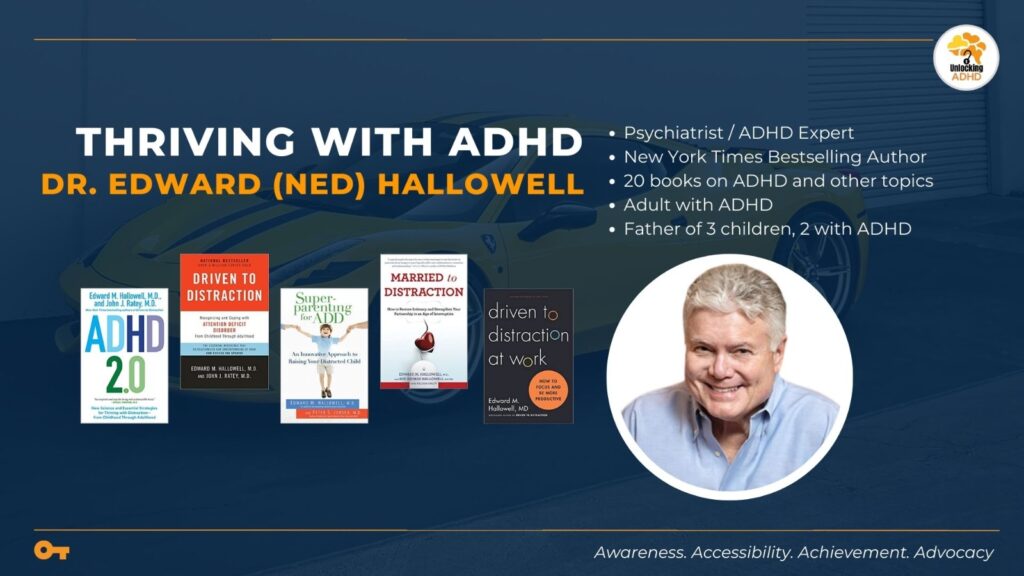
Dr Hallowell opens the session by positing that the term ADHD itself is misleading; that it is not a disorder but a trait— that can become an asset to us when truly managed and unravelled. Conversely, ADHD can be a massive liability when unmanaged or unrealised by us, pointing to the numbers of untreated or undiagnosed individuals in prison, and among those struggling with  addiction and unemployment.

As ADHDers we have within us a titanic wealth of power, creativity and energy akin to the Niagara Falls, Dr Hallowell says, which is but a beautiful, empty deluge if not for the hydroelectric plant it is pumped through. In the same vein, we need to build our own power plants, channelling our ADHD into avenues that allow us to create value out of life. 

He proposes Variable Attention Stimulus Trait — or VAST — as an alternate name to ADHD. 

Rethinking the ADHD Triad 

In unwrapping our inherent gifts, we may look no further than the core triad of ADHD symptoms as defined by the DSM-V (Diagnostic and Statistical Manual of Mental Disorders): Distractibility, Impulsivity and Hyperactivity. 

Dr Hallowell suggests a strength in the flipside of each symptom: 

  • Distractibility as curiosity — our boundless curiosity in the world can mean innovation, formation of new ideas stemming from simple “What’s this? What’s that?”s. Think Nobel-prize-winning scientist and ADHDer Kary Mullis, who developed the PCR test now used to detect COVID-19. 
  • Impulsivity as creativity  — or, creativity as spurs of impulsivity done right. Learning to martial or organise the “pop” of new thoughts and ideas that come to us out of nowhere.
  • Hyperactivity as energy — energy, pure and simple.

Advice with Dr Hallowell (Q&A) 

On the impact of our environment and culture on ADHD: Dr Hallowell suggests that a fear and punishment-based classroom/ workplace/ business/ family is the great disability, not our condition. Conversely, ADHDers would thrive in an atmosphere of exploration, discovery and affirmation — high-trust, low-fear settings. 

On lack of accessibility to financial support when living with ADHD: Dr Hallowell emphasises the importance of developing “(the other) Vitamin C” — free and infinite Connection to other people — in our living or working environments. 

On disclosing ADHD in the workplace: Dr Hallowell advises against specifically disclosing the term ADHD due to persistent surrounding stigma; instead, to highlight your strengths and weaknesses as they are. The best workplace accommodation is in finding a job most suited to your strengths. 

On steps to take suspecting you have ADHD:  

  • Educate yourself — learn and read up on the condition; how it fits you and what changes it suggests.  
  • Modify your environment — starting with small changes (example: placing your keys in a basket so you don’t lose them) — and incorporating a coach into your life — someone to look out for you  
  • Trial of medication with professional guidance. 

On self-compassion with ADHD: Dr Hallowell advises to never worry alone, and set to a more realistic goal of liking yourself rather than the act of loving yourself. Genuine positive self-regard will follow naturally from reaching out to a trusted other/others and getting the help you need.

Chong Ing Kai: Stick ‘Em and his ADHD journey
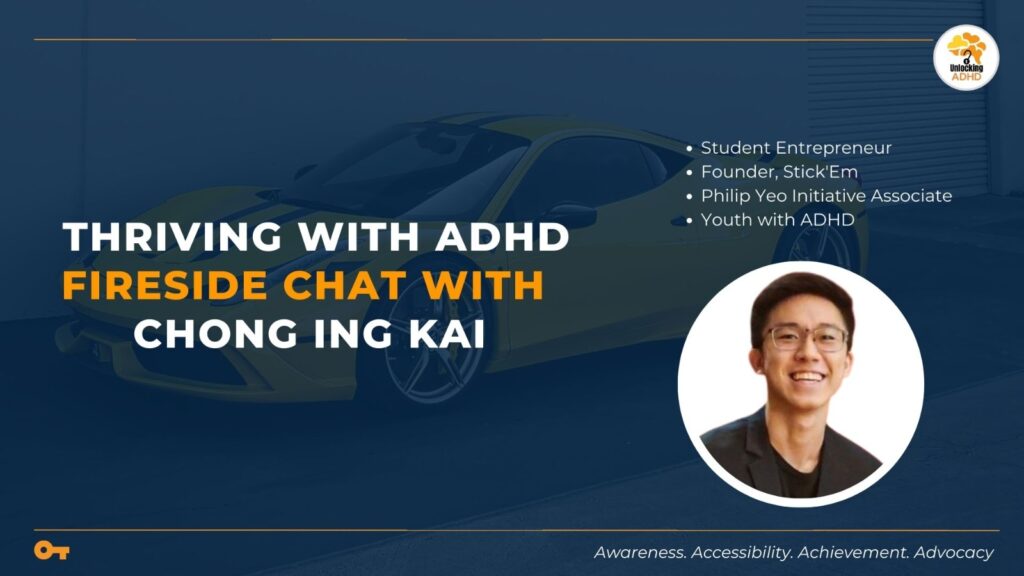
In the second half of the session, we hear from Kai, founder and CEO of Stick ‘Em: a start-up that aims to bridge accessibility to STEAM (Science, Technology, Engineering, Arts and Maths)  education and increase technological literacy in youths.

Kai shares about learning to wield his ADHD strengths, beginning from his nascent primary school days. Melding his hyperactivity and creativity with a passion for engineering has enabled a move from homemade air cannons and tasers to his later work in assistive technology (example: toy cars for children with muscular dystrophy) and impact-driven projects (example: developing a remotely operated vehicle for monitoring coral reefs). 

Stick ‘Em is a natural culmination of his years of innovation and experience in robotics teaching, offering affordable STEAM education through robotic kits which include 3D printed connectors and disposable chopsticks. Children are free to get creative with their chopstick robot designs, equipped with simple tools to realise their ideas. Stick ‘Em hopes to not only nurture creativity and problem-solving skills in the youth they reach out to, but forge long-lasting communities of young innovators. 

Advice with Kai (Q&A)

For parents of children with ADHD: Kai shares about how his parents adapted their parenting style to suit his condition: approaching his impulsivity and temper tantrums with empathy instead of corporal punishment (ie. caning). 

He talks about how their “never give up” attitude towards him, married with a recognition of where his true strengths lay, allowed him to focus on his engineering and technical skills instead of stressing over conventional academic success. On the topic of schools and examinations, he suggests that asking for extra time accommodations and starting medication would be of great help. 

Lastly, he shares about the importance of instilling core values like respect for others and empathy in children— how his innovations and ideas that have come to be are based on his mother’s central question of “How useful is this for the world?” 

On managing weaknesses and burn out: In starting his business, Ing Kai shares about how it was important for him to recognise his weaknesses (example: dealing with logistics) and in turn find people (in his case, his co-founder) who could make up for them. He also talks about dealing with micro burnouts by being honest and forward with his team — communicating when he needs days of rest and delegating responsibilities accordingly

If you like this article and find it helpful, please share this with your networks. Do consider donating to support us in our mission to empower ADHDers and their families to live life to the fullest so that we can continue to create more content that informs and equips the ADHD community – Please Donate To Support UA.

*DISCLAIMER: This information is provided for educational purposes only and does not constitute medical advice. Should you suspect that you have ADHD, consider seeking the advice of a trained mental health professional with any questions you may have about your condition.

Subscribe to our newsletter

Leave a Reply Cancel reply

Your email address will not be published. Required fields are marked *

  • Rating

This site uses Akismet to reduce spam. Learn how your comment data is processed.

  1. ADHD and Obesity – Is there a link?
  2. ADHD Stories – Chong Ing Kai’s Story
  3. Essential Job Hunting Tips for ADHDers

Resources on ADHD

  • Adult ADHD Self-Assessment Tool
  • Understanding ADHD
  • Healthcare and Community Services
  • Support Groups
  • Online Resources
  • Contact Us (General Enquiries)
  • Contact Us (Counselling Services)

Follow us

Copyright © 2026 · Unlocking ADHD Ltd. All rights reserved. Terms | Privacy policy
Unlocking ADHD Ltd does not provide medical advice, diagnosis, or treatment. The material on this web site is provided for educational purposes only.

We use cookies on our website to give you the most relevant experience by remembering your preferences and repeat visits. By clicking “Accept All”, you consent to the use of ALL the cookies. However, you may visit "Cookie Settings" to provide a controlled consent.
Cookie SettingsAccept All
Manage consent

Privacy Overview

This website uses cookies to improve your experience while you navigate through the website. Out of these, the cookies that are categorized as necessary are stored on your browser as they are essential for the working of basic functionalities of the website. We also use third-party cookies that help us analyze and understand how you use this website. These cookies will be stored in your browser only with your consent. You also have the option to opt-out of these cookies. But opting out of some of these cookies may affect your browsing experience.
Necessary
Always Enabled
Necessary cookies are absolutely essential for the website to function properly. These cookies ensure basic functionalities and security features of the website, anonymously.
CookieDurationDescription
cookielawinfo-checkbox-analytics11 monthsThis cookie is set by GDPR Cookie Consent plugin. The cookie is used to store the user consent for the cookies in the category "Analytics".
cookielawinfo-checkbox-functional11 monthsThe cookie is set by GDPR cookie consent to record the user consent for the cookies in the category "Functional".
cookielawinfo-checkbox-necessary11 monthsThis cookie is set by GDPR Cookie Consent plugin. The cookies is used to store the user consent for the cookies in the category "Necessary".
cookielawinfo-checkbox-others11 monthsThis cookie is set by GDPR Cookie Consent plugin. The cookie is used to store the user consent for the cookies in the category "Other.
cookielawinfo-checkbox-performance11 monthsThis cookie is set by GDPR Cookie Consent plugin. The cookie is used to store the user consent for the cookies in the category "Performance".
viewed_cookie_policy11 monthsThe cookie is set by the GDPR Cookie Consent plugin and is used to store whether or not user has consented to the use of cookies. It does not store any personal data.
Functional
Functional cookies help to perform certain functionalities like sharing the content of the website on social media platforms, collect feedbacks, and other third-party features.
Performance
Performance cookies are used to understand and analyze the key performance indexes of the website which helps in delivering a better user experience for the visitors.
Analytics
Analytical cookies are used to understand how visitors interact with the website. These cookies help provide information on metrics the number of visitors, bounce rate, traffic source, etc.
Advertisement
Advertisement cookies are used to provide visitors with relevant ads and marketing campaigns. These cookies track visitors across websites and collect information to provide customized ads.
Others
Other uncategorized cookies are those that are being analyzed and have not been classified into a category as yet.
SAVE & ACCEPT

Daniel

This image has an empty alt attribute; its file name is logo-2-1.png
AMKFSC Community Services has a Psychological Services Unit (PSU) which has a team of clinical and counselling psychologists for children/youth and their parents. Core services include psychoeducational assessments (5 to 16 years old) for ADHD and other learning disabilities. They also offer group and individual psychotherapy. They only provide services to residents in their constituency.

Fees are $70 per one hour session. Psychoeducational testing ranges between $750 to $1,120 depending on the tests required.

Email: psureferral@amkfsc.org.sg.

Moonlake is the Founder of Unlocking ADHD. A community builder and multi-hyphenate, she runs to fat burn so that she can enjoy food with family and friends. She is still working on strengthening the brakes for her ADHD wiring…