UnlockingADHD

Empowering ADHDers and their Families to Live Life to the Fullest

UnlockingADHD

Empowering ADHDers and their Families to Live Life to the Fullest

  • English

  • About Us
    • Publications
    • About Us
    • Our Mission/Logo
    • Our Board of Directors
    • Scientific and Medical Advisory Committee (SMAC)
    • Our Team
    • Media coverage
  • Understanding ADHD
    • What is ADHD?
    • Who should I see?
    • Should I get assessed?
    • Diagnosis / Assessments
    • Medication
    • Natural ADHD Remedies
    • Other Treatment Options
    • ADHD Comorbidities
    • Health & Nutrition
    • Personal stories
  • Living with ADHD
    • Youth
      • ADHD in Teens
      • Careers
      • Executive Function
      • Personal Stories
      • School
    • Families
      • ADHD in Children
      • School
      • Parenting Approaches
      • Personal Stories
      • Self care
    • Adults
      • ADHD in Adults
      • ADHD in women
      • Executive Function
      • Personal Stories
      • Workplace Issues
    • Differently Wired Minds
      • The UnlockingADHD Team
      • The Creatives
      • The Entrepreneurs
      • The Social Warriors
      • The Guides
      • The Catalysts
  • ADHD Resources
    • Adult ADHD Self-Assessment Tool
    • Healthcare and Community Services
    • Seminar/Conference
    • Book Reviews
    • Other Resources
  • Get Involved
    • Volunteering
    • Events
    • Donations
    • Careers
  • Contact Us
    • Contact Us (Counselling Services)
    • Contact Us (General Enquiries)
  • Donate
ADHD 101, ADHD Comorbidities, ADHD in Adults, Adults, Self Care

ADHD and Depression in Adults: A Personal Perspective

ADHD 101, ADHD Comorbidities, ADHD in Adults, Adults, Self Care
May 31, 2022

Unlocking ADHD writer Megan Tan shares about her personal experience with ADHD and co-morbid depression in adults. She also shares her tips for spotting the difference and managing the symptoms.
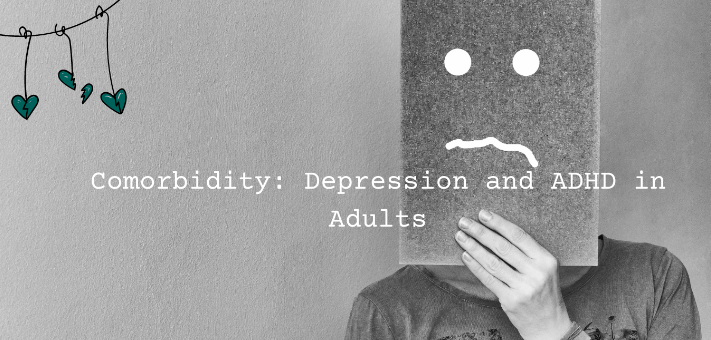
Depressed person hiding face behind sad smiley. Title is ADHD and depression in adults
Image Source: Canva

ADHDers may have a higher predisposition to mood disorders such as depression (known as Major Depressive Disorder)1. Such disorders are usually multifactorial. Contributing factors include brain chemistry, genetics and the environment. ADHDers are more likely to receive criticism2, struggle with socialising and have issues with emotional regulation3. Therefore, it comes as no surprise that some of them develop co-morbid disorders (including depression) . You may be curious about ADHD and depression in adults. You may wonder, ” What does depression look like in adults with ADHD? How do we differentiate between the two? How do I cope with ADHD and depression at the same time?”

This is my personal perspective on ADHD and depression in adults, and I hope that it will help readers.

So, what is depression and what does it look like in ADHD adults?


Depression is a mood disorder4. It is characterised by having a low mood for a period of two weeks or more. In adults, depression can present as withdrawal from social activities, difficulty with maintaining hygiene, heightened irritability, over-eating or under-eating, inadequate or excessive sleeping and slowed speech. For people who menstruate, depression can lead to changes in the menstrual cycle5.

Depressed individuals may find themselves experiencing feelings of worthlessness or guilt. They may lack the energy to perform daily tasks. Depressed people lose interest in previously enjoyable activities,  and frequently harbour thoughts of self-harm or suicide. A nationwide study showed that one in seven people in Singapore will experience a mental health disorder in their lifetime, with depression being the most common disorder6. Additionally, women are more likely to suffer from depression than men.

However, it must be noted that mental health conditions can present in a myriad of ways, and that many invisible illnesses like depression can easily go unnoticed. Thus, it is  important to check on those whom you suspect may be suffering from mental health issues. It is crucial to fully understand each individual’s situation.

ADHD vs Depression


AHD and depression often overlap. Certain symptoms such as sleeping issues or difficulty concentrating can also be associated with ADHD. As such, it is important to distinguish between the two so that one can receive proper care.  Having lived with major depressive disorder for a few years, here are the ways in which I distinguish between depression and ADHD:

Lack of Interest

There is a difference between coming out of a hyperfixation and having no interests whatsoever. When I come out of a hyperfixation, there is often a gradual loss of interest in the topic before I finally drop it. With depression, the loss of interest is very sudden. Furthermore, it is impossible to find fulfillment from previous hyperfixations or hobbies. 

Low Moods

ADHDers can cycle through many emotions and feelings throughout the day. With this in mind, how can one tell when they are depressed? In my experience, depression is a constant, low mood throughout the day.  The sensation is similar to having a stone lodged in my chest and being unable to dislodge it. Checking on your somatic sensations can also help with determining your mood (e.g. feeling pain in the chest when experiencing emotional pain).

Lack of Energy

This is usually a telltale sign of depression for me. It often shows up as a desire to stay in bed for the whole day, a lack of energy to engage in basic tasks or the lack of a desire to do anything besides sleep. I also find that a lack of motivation often accompanies this loss of energy. On the other hand, with ADHD, that motivation is simply channeled elsewhere (e.g. towards more interesting activities)

Coping with Depression


Friends realising about ADHD and depression in adults, consoling depressed friend with ADHD
Image Source: Crying girl photo created by rawpixel.com – www.freepik.com

The first step is acknowledging that you need help. Reaching out to a trusted person-  be that person be a friend or a loved one- is very important. Asking for help can be overwhelming and daunting, and you may feel weak or afraid. These feelings are completely valid. However, asking for help is never a sign of weakness. Reaching out for support is essential for recovery.

Try therapy. Therapy has been shown to help treat and manage not just depression, but also ADHD. Mental health professionals often use Cognitive Behavioural Therapy (CBT) to treat both ADHD and depression in adults. As someone who has undergone CBT, I find it very useful in helping me to manage and challenge my depressive thoughts.

Consider medication. While medication is not for everyone, do not automatically turn a blind eye to it. Medication for mental health often gets a bad rep, but it can greatly help  with daily tasks. I have found that a combination of medication and therapy work well for me. Selective Serotonin Reuptake Inhibitors (SSRIs) are often prescribed for depression. SSRIs help to regulate the chemicals in the brain by slowing the re-uptake of serotonin (the chemical responsible for mood, among other things) so that it stays in the brain a little longer. 

Even if you are depressed, there is still hope
Image Source: Wokandapix from Pixabay

Final Thoughts


Depression can feel overwhelming and everlasting. However, ADHD and depression in adults can be managed with proper care, treatment and support. If you feel this way, know that you are not alone and that there are many resources available to help you on your journey.

If you are looking for articles for depression in children, check out this article by Unlocking ADHD!

References:

  1. Coexisting conditions. CHADD. (2018, December 3). Retrieved May 15, 2022, from https://chadd.org/about-adhd/coexisting-conditions/ 
  2. William Dodson, M. D. (2022, April 26). How ADHD ignites rejection sensitive dysphoria. ADDitude. Retrieved May 15, 2022, from https://www.additudemag.com/rejection-sensitive-dysphoria-and-adhd/ 
  3. Thomas E. Brown, P. D., & Editors, A. D. D. (2021, December 13). 7 truths about ADHD and intense emotions. ADDitude. Retrieved May 15, 2022, from https://www.additudemag.com/adhd-emotional-regulation-video/ 
  4. Mayo Foundation for Medical Education and Research. (2018, February 3). Depression (major depressive disorder). Mayo Clinic. Retrieved May 15, 2022, from https://www.mayoclinic.org/diseases-conditions/depression/symptoms-causes/syc-20356007 
  5. Schimelpfening, N. (2021, January 5). How your emotional health can affect your menstrual cycle. Verywell Mind. Retrieved May 15, 2022, from https://www.verywellmind.com/can-depression-make-your-period-late-1066767 
  6. Latest nationwide study shows 1 in 7 people in Singapore has experienced a mental disorder in their lifetime. (2018, December 11). Institute of Mental Health. Retrieved May 15, 2022, from https://www.imh.com.sg/Newsroom/News-Releases/Documents/SMHS%202016_Media%20Release_FINAL_web%20upload.pdf
  7. Holland, K. (2022, April 27). Cognitive behavioral therapy for depression: How does it work? Healthline. Retrieved May 15, 2022, from https://www.healthline.com/health/depression/cognitive-behavioral-therapy 
  8. Mayo Foundation for Medical Education and Research. (2019, September 17). The most commonly prescribed type of antidepressant. Mayo Clinic. Retrieved May 15, 2022, from https://www.mayoclinic.org/diseases-conditions/depression/in-depth/ssris/art-20044825 

If you like this article and find it helpful, please share this with your networks. Do consider donating to support us in our mission to empower ADHDers and their families to live life to the fullest so that we can continue to create more content that informs and equips the ADHD community – Please Donate To Support UA.

*DISCLAIMER: This information is provided for educational purposes only and does not constitute medical advice. Should you suspect that you have ADHD, consider seeking the advice of a trained mental health professional with any questions you may have about your condition.

Subscribe to our newsletter

Leave a Reply Cancel reply

Your email address will not be published. Required fields are marked *

  • Rating

This site uses Akismet to reduce spam. Learn how your comment data is processed.

  1. My Convoluted Road from an ADHD Diagnosis to Self-Acceptance
  2. Enjoying my Golden Years with ADHD
  3. ADHD Stories – Rachel Tng

Resources on ADHD

  • Adult ADHD Self-Assessment Tool
  • Understanding ADHD
  • Healthcare and Community Services
  • Support Groups
  • Online Resources
  • Contact Us (General Enquiries)
  • Contact Us (Counselling Services)

Follow us

Copyright © 2026 · Unlocking ADHD Ltd. All rights reserved. Terms | Privacy policy
Unlocking ADHD Ltd does not provide medical advice, diagnosis, or treatment. The material on this web site is provided for educational purposes only.

We use cookies on our website to give you the most relevant experience by remembering your preferences and repeat visits. By clicking “Accept All”, you consent to the use of ALL the cookies. However, you may visit "Cookie Settings" to provide a controlled consent.
Cookie SettingsAccept All
Manage consent

Privacy Overview

This website uses cookies to improve your experience while you navigate through the website. Out of these, the cookies that are categorized as necessary are stored on your browser as they are essential for the working of basic functionalities of the website. We also use third-party cookies that help us analyze and understand how you use this website. These cookies will be stored in your browser only with your consent. You also have the option to opt-out of these cookies. But opting out of some of these cookies may affect your browsing experience.
Necessary
Always Enabled
Necessary cookies are absolutely essential for the website to function properly. These cookies ensure basic functionalities and security features of the website, anonymously.
CookieDurationDescription
cookielawinfo-checkbox-analytics11 monthsThis cookie is set by GDPR Cookie Consent plugin. The cookie is used to store the user consent for the cookies in the category "Analytics".
cookielawinfo-checkbox-functional11 monthsThe cookie is set by GDPR cookie consent to record the user consent for the cookies in the category "Functional".
cookielawinfo-checkbox-necessary11 monthsThis cookie is set by GDPR Cookie Consent plugin. The cookies is used to store the user consent for the cookies in the category "Necessary".
cookielawinfo-checkbox-others11 monthsThis cookie is set by GDPR Cookie Consent plugin. The cookie is used to store the user consent for the cookies in the category "Other.
cookielawinfo-checkbox-performance11 monthsThis cookie is set by GDPR Cookie Consent plugin. The cookie is used to store the user consent for the cookies in the category "Performance".
viewed_cookie_policy11 monthsThe cookie is set by the GDPR Cookie Consent plugin and is used to store whether or not user has consented to the use of cookies. It does not store any personal data.
Functional
Functional cookies help to perform certain functionalities like sharing the content of the website on social media platforms, collect feedbacks, and other third-party features.
Performance
Performance cookies are used to understand and analyze the key performance indexes of the website which helps in delivering a better user experience for the visitors.
Analytics
Analytical cookies are used to understand how visitors interact with the website. These cookies help provide information on metrics the number of visitors, bounce rate, traffic source, etc.
Advertisement
Advertisement cookies are used to provide visitors with relevant ads and marketing campaigns. These cookies track visitors across websites and collect information to provide customized ads.
Others
Other uncategorized cookies are those that are being analyzed and have not been classified into a category as yet.
SAVE & ACCEPT

Daniel

This image has an empty alt attribute; its file name is logo-2-1.png
AMKFSC Community Services has a Psychological Services Unit (PSU) which has a team of clinical and counselling psychologists for children/youth and their parents. Core services include psychoeducational assessments (5 to 16 years old) for ADHD and other learning disabilities. They also offer group and individual psychotherapy. They only provide services to residents in their constituency.

Fees are $70 per one hour session. Psychoeducational testing ranges between $750 to $1,120 depending on the tests required.

Email: psureferral@amkfsc.org.sg.

Moonlake is the Founder of Unlocking ADHD. A community builder and multi-hyphenate, she runs to fat burn so that she can enjoy food with family and friends. She is still working on strengthening the brakes for her ADHD wiring…