


Unlocking ADHD volunteer Alisa Cheng reflects on how her life changed dramatically after being diagnosed with ADHD in her mid-teens. The support she received in managing her condition helped her to overcome the significant challenges that she faced.
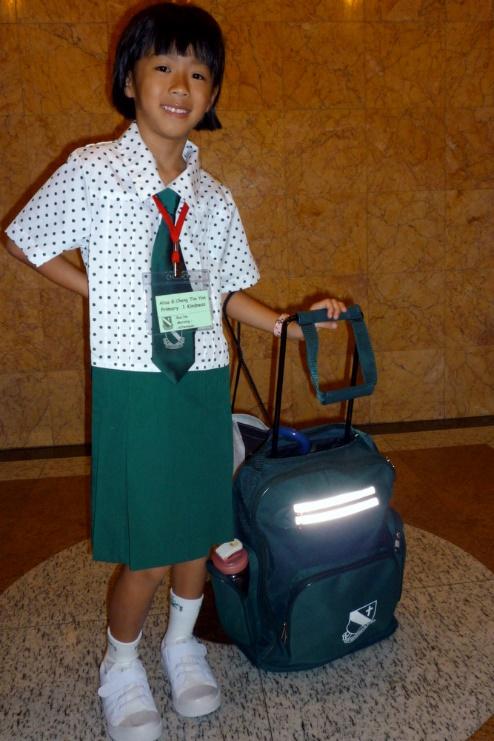
I was considered a bright child by my teachers. I had little trouble adapting to different social settings, making friends, and learning new things. As time passed, however, I struggled to keep my grades up. This disappointed my teachers as they would always write on my report cards that I was capable of doing better if I would just focus in class. I was also labelled as a rather forgetful child and on many occasions would lose textbooks or important personal belongings, much to the frustration of my parents. This often resulted in long lectures which ended in tears.
I was formally diagnosed with ADHD at the age of 15. This was in late 2018 at the end of my Secondary Three year, when I had failed most of my subjects. My inattentive tendencies often resulted in my inability to focus in school due to a variety of reasons including spacing out and feeling fatigued in class. My ADHD made many things feel un-stimulating, which resulted in sluggishness and low productivity. I spent an excessive amount of time on assignments, produced mediocre work, and would sometimes zone out for short periods during exams.
The watershed moment(s)
Just before the end of the school year, sign-ups for an International Biomedical Quiz in 2019 were opened to my class. I figured that missing a day of school wouldn’t matter much since I was pretty much a lost cause. Thus I seized the opportunity to sign up for the quiz. Over the year-end holidays, I used this quiz as an excuse to spend time on my computer, saying that I needed to do research to find out about the topic for the quiz (which happened to be ophthalmology) when in fact I was idling away on YouTube and the rewritten version of Club Penguin to kill time.
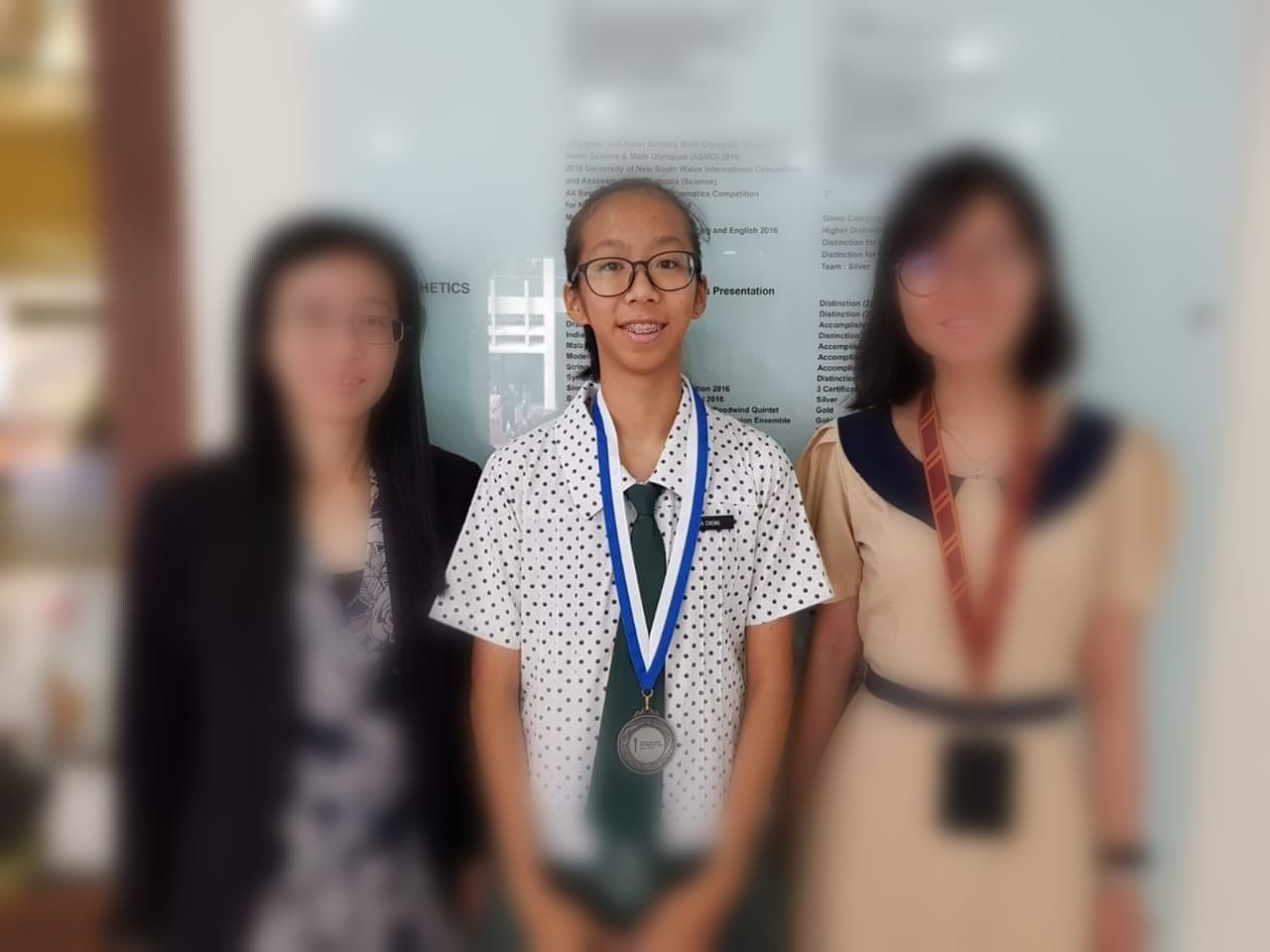
I had just started taking the ADHD medication that was prescribed to me. While it helped me to focus a little better, I did not have the skills at that point to stay focused. I had multiple browser tabs and windows open, and found myself peeking at the tabs with the knowledge I was supposed to internalise before the quiz. My curiosity would draw me to the articles I’d pulled up and I found myself unable to resist them as I went deeper and deeper into the details of various diseases to do with the eyes. I started looking into the nomenclature of various conditions and started seeing links between anatomy and disease. Over time, I started finding it easier and easier to not derail from my research as my interest in the quiz topic grew. This continued until school began. A month later, I got to skip a day of school to go for the quiz. To my surprise, I ended up receiving a Silver Medal for the quiz. This was one of the first times that I realised that maybe I actually wasn’t dumb and could do great things if I put my mind to it. A similar situation happened a month later when I signed up for a math competition to skip school with my friends once again, and we obtained a Runner Up Certificate. I don’t think I had ever received this much recognition for my work in school before.
2019 was also the year that I received an Exemplary Award on a University of New South Wales (UNSW) International Competitions and Assessments for Schools (ICAS) Mathematics Paper for my year group. It came as a pleasant surprise as nobody really took the UNSW ICAS papers very seriously. I was the only person in my school who received the award and was quite embarrassed to be presented the certificate in front of the school during assembly.
Another pleasant surprise
In my Secondary Four year, my parents attended the annual Parent-Teacher Meeting (PTM). Every PTM for the previous 10 years had been the same story – my parents would hear feedback from teachers about my poor attitude. There was always something that I would have done that would have disappointed both my teachers and parents. The PTM had become an event that I dreaded very much as it was often followed by scolding or, as I grew older, quieter warnings that would chill me to the bone.
Therefore, before this PTM, I recall feeling anxious about not receiving a good report. Despite my track record for that year being good, there was always the inherent worry that I would hear the same words that would scare me. When the teachers began to speak, my heart nearly stopped. I did not expect the appraisal I received. My mother said she had to fight back tears as she listened to my form teacher deliver praise about me, and share his and my other teachers’ delight regarding my improved attitude and grades. It was the first year ever that my parents attended a PTM where they didn’t receive any bad reports about me. Of course, I wished that every PTM could have been this good, but I guess it was the sweetest ending to 10 bitter years at school.
A different strategy
After this, I started putting more effort into doing my homework, and gave up my phone in hopes of staying more focused on my work to do well in the upcoming O Levels. I spent a significant amount of time studying outside the house with my best friend, who had also given up her phone to focus on her work. As we were almost always together, it was easier to get started with work as there was mutual peer pressure to study. My teachers, who initially were not impressed by my grades and poor attitude in class the previous year, were quite pleased to see the dramatic change in my behaviour and acknowledged it halfway through the year with a Model Learner’s award, a first for me.
Taking my medication routinely helped me to minimise a lot of my ADHD symptoms, although I still faced some challenges with studying. Thankfully, I managed to achieve decent grades in the O Level exams and qualified to enter Junior College in Singapore. My parents decided to send me to a boarding school in the United Kingdom to sit for my A Levels, hoping that a change of environment would be good for me.
Pandemic challenges
The COVID-19 pandemic threw my studies into chaos. After a very disruptive academic year, I returned to Singapore and started at a new school in January 2021, barely six months before my A Levels. This meant that I had to re-learn certain facts due to a change in the syllabus. I was also quite stressed when I found out that the exam results from my previous studies were mostly not transferable and I had to complete two years of studies in six months – essentially, I had to sit for 18 exams for my International A Levels! Just the thought of it was exhausting. My old friends and I decided to start meeting up almost every day after school to release steam and study together. Despite us not learning the exact same content, this Study Buddy system worked as we shared our burdens and supported each other while studying.
In February 2021, I was informed that the International A Level examinations were cancelled due to the COVID-19 pandemic. I ended up having to do nearly 50 graded papers instead of ‘only’ 18 in order to complete my A Level qualifications! My classmates and I were juggling sitting for graded exam papers while attending lessons in a six-week period. Some of us conked out in class due to sheer exhaustion. At home, I sometimes would lie on my bed and cry in silence because I just wanted to give up. The last two weeks of exams were particularly hard for me as I was completely burnt out by then. My parents’ encouragement and prayers, and their reminder not to give up at the last few hundred metres from the finish line, kept me going.
Light at the end of the tunnel
Despite the challenges I faced with the exam situation, I was really fortunate to have a good group of friends to study with me, as well as excellent support from my developmental-behavioural paediatrician and my school’s Special Education Needs Coordinator (SENCo). These, coupled with copious amounts of patience from my teachers, my executive function coach, and parents, became major pillars of support for me during this extremely trying time.
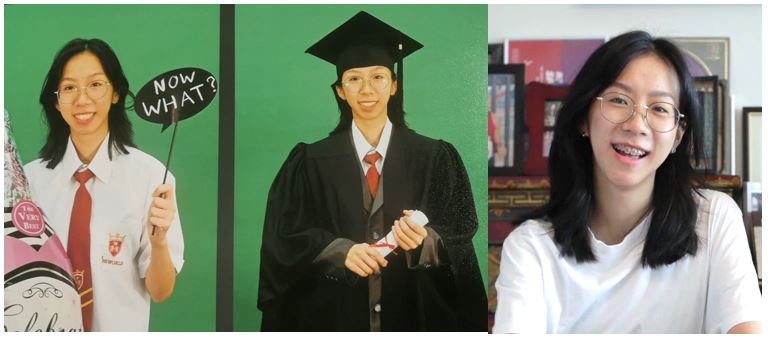
Less than three years after I was diagnosed with ADHD, I am grateful to be embarking on a new phase of life this September 2021 – starting my university studies in Dentistry in the UK.
Reflections
While my ADHD condition is on the mild to moderate side, it has impacted my childhood greatly. I often wish that I could have gotten a diagnosis and support at a much younger age, which would have spared me a fair bit of pain growing up. I don’t have major regrets about what I did in the past, though. I think that over time, my experiences taught me a lot about my character and shaped me into who I am today.
Looking back, getting a diagnosis is one of the best things that’s happened to me so far. Having a diagnosis helped explain the remarks on my report cards I received every term, as well as verbalise things that I struggled with on a daily basis. It was the first step to enabling me to get the support I needed to grow in a very short period of time.
[If you liked this story and found it helpful, please SHARE it. For more personal stories about ADHDers, please click here.]


Never accept status quo. The best is yet to be 👍👍👍
Well done Alisa!! Thanks for sharing. I’m glad that although you were diagnosed relatively late, it was in good time to help you excel. My adult sister just got diagnosed recently. I often wonder how her life might have been different if her ADHD had been picked up in school (looking back, it was so obvious!) , if she had happened to hyperfocus on an academic subject, if her teachers had understood and given her the right help. No one is to blame of course, given that this happened decades ago, before ADHD was widely recognised. And better late than never, because at least now there is an explanation, and hopefully that gives some direction and help.
Reach for the stars! Appreciate the beautiful strengths in ADHD and never let it hold you back 💕
Your story are very encouraging! Thanks for sharing your journey with us.
appreciate your message, Amber!!
So proud of you, Allie! And having the best set of parents do wonders too ❤️ all the best in the UK!
thank you, Linda, for your encouragement